
Financial Markets & Trading Explained:
A Realistic Guide for Aspiring Traders
Author : Ratender Singh Dhull
If you have ever watched stock prices move in real time, followed crypto charts at 2 a.m., or wondered how people actually make a living trading markets, you are not alone.
For many in their 20s and early 30s, financial markets are both mysterious and magnetic. They promise freedom, global relevance, and intellectual challenge, but they are also full of noise, hype, and half-truths.
Therefore, let us slow it down and get real. This is not a “get rich quick” story.
This is about understanding how financial markets operate, what financial trading entails, and how individuals can build successful careers in this field. Be clear, be confident and don’t overthink it. The beauty of your story is that it’s going to continue to evolve, and your site can grow with it. Your goal should be to make it feel right for right now. Later will take care of itself. It always does.
First Principles: What Are Financial Markets?
At their core, financial markets exist to solve a simple problem:
Some people have money. Others need money. Markets connect these two aspects. Companies raise capital to grow their businesses. Governments fund infrastructure projects. Investors allocate their savings in search of returns. Traders help prices adjust efficiently, depending on the information.
Financial markets are platforms (physical or digital) where people and institutions trade financial instruments. In plain terms, they are the “places” that bring buyers and sellers together, making it easy to exchange assets at low cost
That’s it.
Everything else (stock exchanges, forex platforms, derivatives, crypto) is just a structure built around this basic idea. Financial markets also perform three other critical functions.
They provide liquidity (you can enter and exit positions easily)
They help manage risk (through hedging instruments)
They enable global trade (especially via currency markets)
Without financial markets, modern economies would not function. Without traders, markets would not move.
Did you know? Financial markets drive the economy. For instance, India’s National Stock Exchange (NSE) just became the world’s largest derivatives exchange (2023) and ranks third globally in equities. Market cap of all listed companies in India exceeded $4 trillion last year – highlighting massive scale and opportunity for participants.
How Financial Markets Work
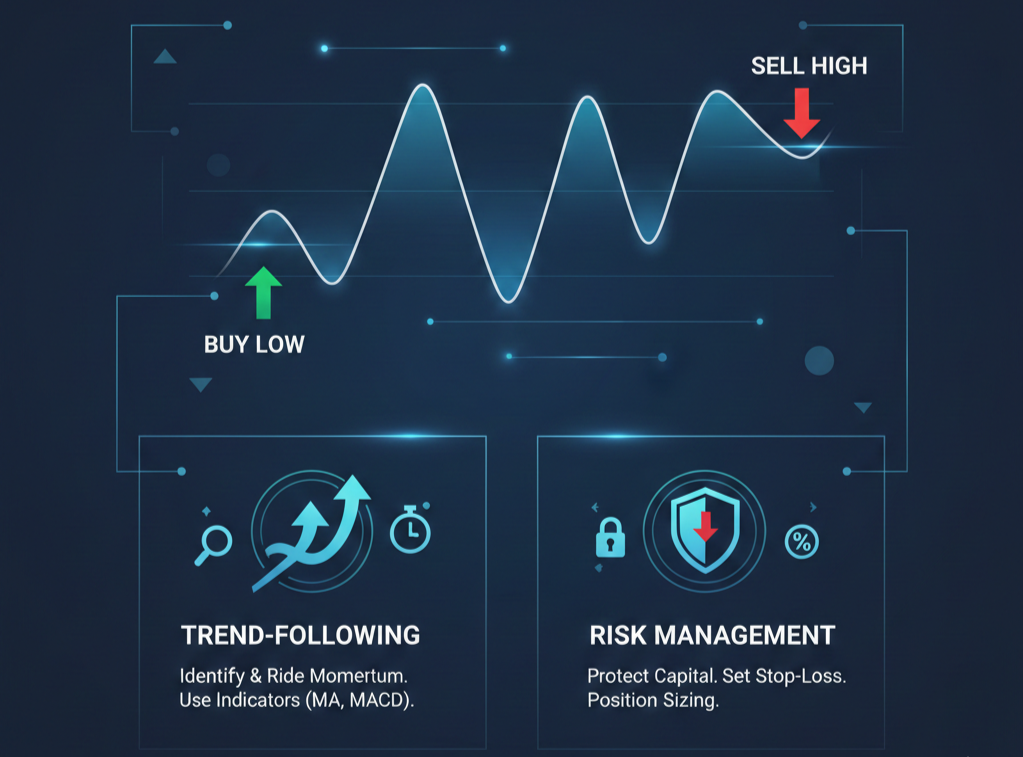
A person traveling from Europe to India may enter the Forex market to convert euros to rupees at a fair rate. A manufacturing company might trade in the commodities market to secure steel or oil for its business. But most traders ,they don’t need the actual assets – they just take a view on prices to earn a return. This speculative trading provides liquidity to markets, and is why we see huge daily volumes (e.g. over $9.6 trillion of currencies trade each day worldwide.
The Major Financial Markets (Explained Without the Textbook)
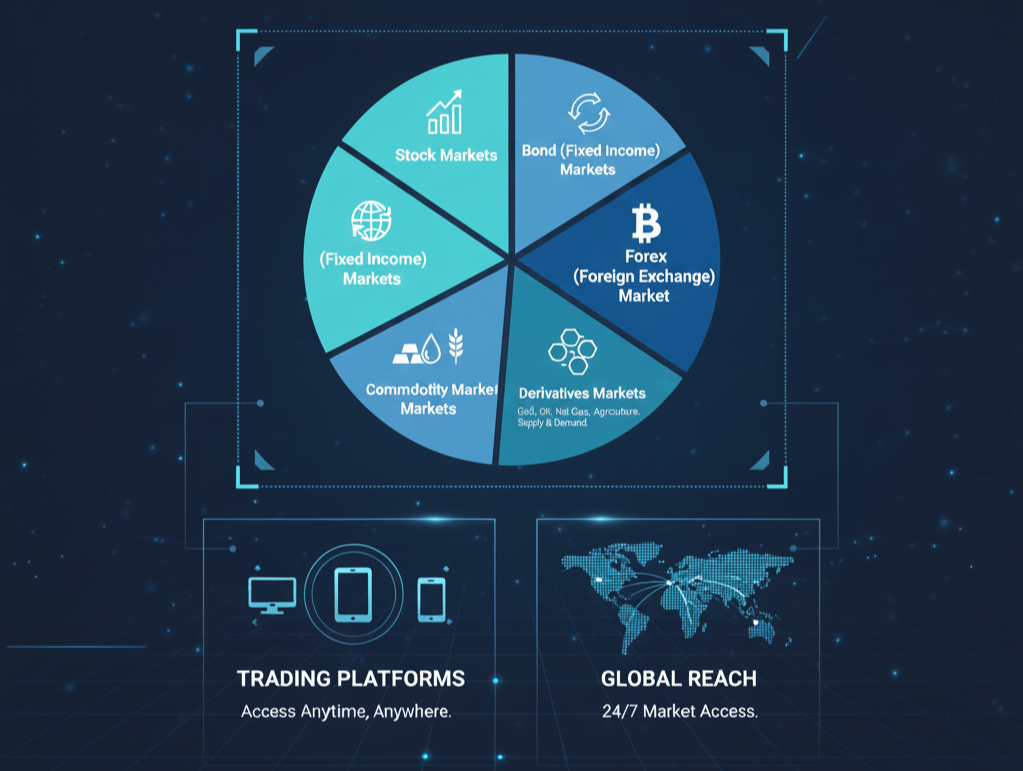
If you are new to trading or finance, here is the landscape you are dealing with:
Stock Markets
Ownership in companies is bought and sold. Consider NSE, BSE, NYSE, and Nasdaq. Stocks reflect business performance, expectations and sentiment.
Bond (Fixed Income) Markets
Governments and corporations borrow money. Less flashy but massively influential, interest rates shape everything.
Forex (Foreign Exchange) Market
It is the largest market in the world. Trillions traded daily. Currency pairs such as EUR/USD and USD/INR quietly power global trade, travel, and geopolitics.
Commodity Markets
Gold, oil, natural gas, and agricultural products are often traded via futures and options. These markets respond to real-world supply and demand, as well as global events.
Derivatives Markets
Futures, options, and swaps are tools that derive value from underlying assets. It is used for both risk management and speculation.
Crypto Markets
It is still evolving, volatile, and undeniably influential. A mix of technology, finance, ideology and speculation.
Each market has different rules, participants, and rhythms, but all are connected.
What Is Financial Trading?
Financial trading is the act of buying and selling financial instruments to benefit from price movements.
However, here is the part that most people miss: Trading is not about making predictions. It is about probability and risk. Professional traders do not try to be right all the time.
They focus on:
Managing downside
Executing repeatable strategies
Staying emotionally neutral
Letting probabilities play out over time
Most trades do not involve the physical delivery of anything. You are trading price behaviour, not products.
Who Becomes a Trader?
Not everyone who trades is a “trader.”
Professional traders may work in the following areas:
Banks and financial institutions
Proprietary trading firms and hedge funds
Corporate treasury teams
Or trade independently with structured capital
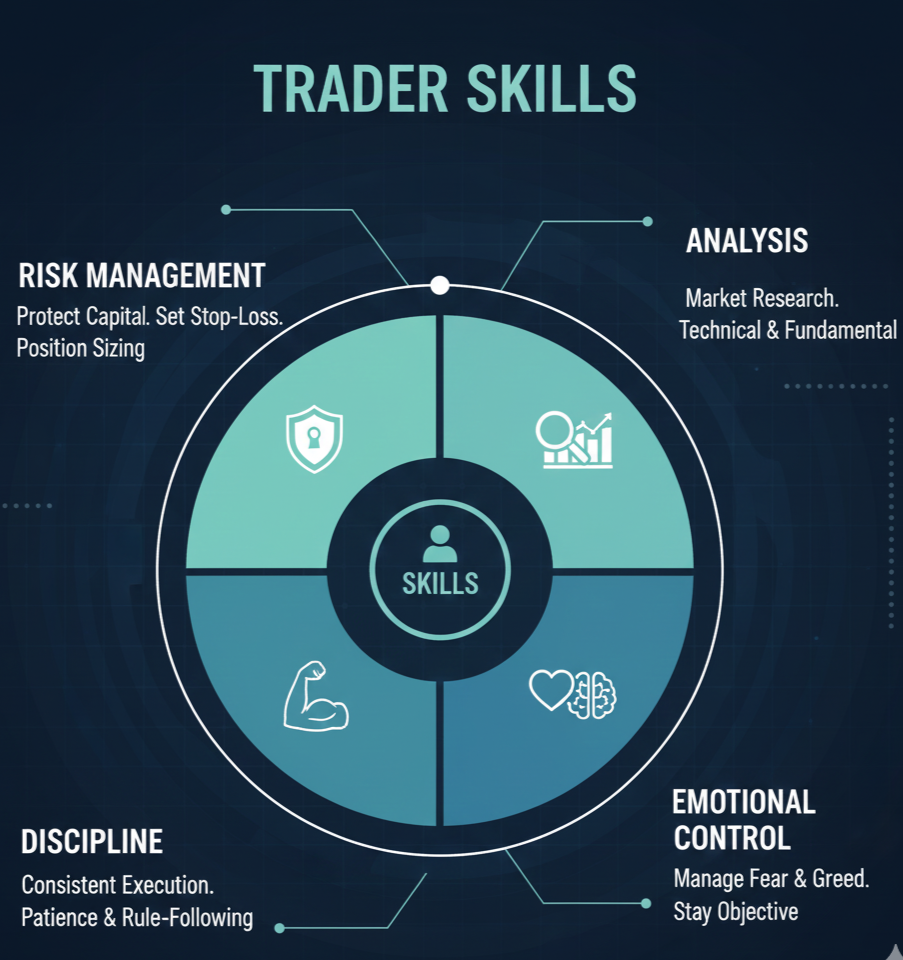
Their daily work involves the following:
Analysing data, news, and market structure
Studying charts and price action
Managing risk aggressively
Executing trades with discipline
Ironically, the best traders are often the least dramatic.
Simply put:
Only those with discipline and a strategic approach tend to beat the odds. Our training and delivery emphasise this mindset from day one.
The Truth About “Successful Traders”
Here’s an uncomfortable statistic:
Most beginners lose money and quit trading.
Not because markets are rigged, but because trading punishes:
Overconfidence
Poor risk management
Emotional decision-making
Lack of structure
Traders who last share common traits:
Discipline over excitement
Risk control over big wins
Patience over constant action
Continuous learning over fixed beliefs
Trading is closer to professional sports or surgery than gambling. Mistakes are expensive.
Why Learning Trading the Right Way Matters
You can try to learn trading alone through YouTube, Twitter threads, and trial-and-error.
Most people do. Most people also burn capital, confidence, and time in this manner.
Structured learning dramatically shortens the curve. This is where institutions like Derivion come in.
Derivion’s Applied Trading & Advanced Capital Markets Program is designed for those who seek more than just surface-level knowledge.
A UK-regulated Level 5 Advanced Diploma
Focus on real market application, not just theory
Mentorship from professionals who trade live markets
Exposure to institutional-grade thinking, tools, and discipline
It treats trading as a profession rather than a side hustle.
Final Thought
Financial markets are not a shortcut to success, but they are a powerful arena for those willing to learn properly.
If you are in your 20s or early 30s and looking for:
A globally relevant skill
A merit-based career
A field that rewards discipline, not background
Then, understanding markets and trading is a smart place to start investing.
Just remember:
The goal is not to trade quickly. It’s to trade well.
This begins with learning the right way.